
EDRC joins advocates from around the country for the 2026 EDC Advocacy Day in Washington, DC.
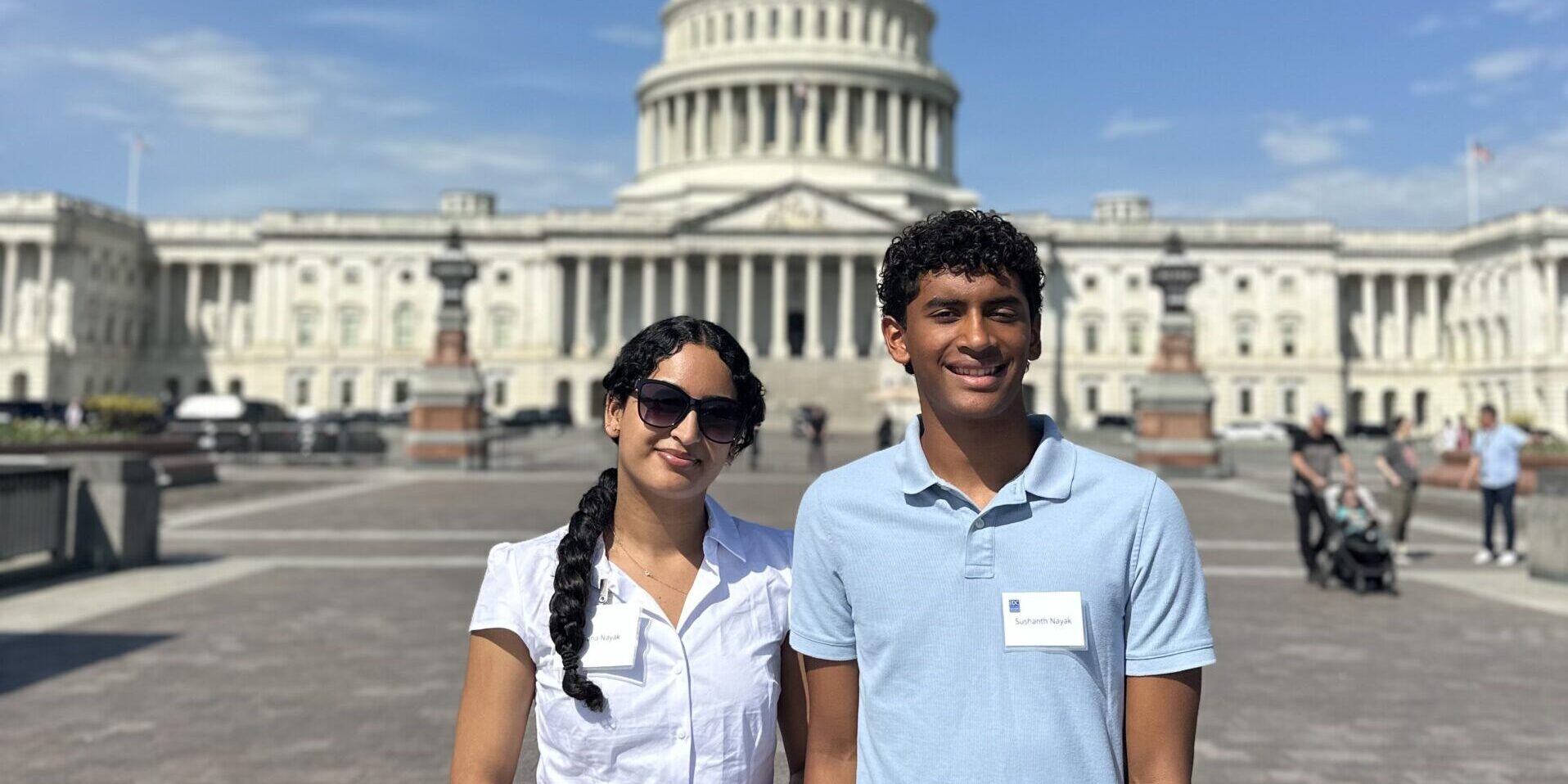
This year, thousands gathered in DC to advocate for the rights and health of all Americans living with an eating disorder. EDRC members Sahana and Sushanth Nayak met with representatives from California to discuss the importance of eating disorder research, awareness, and early intervention.
We hope to see you all again for next year’s Advocacy Day! Here’s what our team had to say about their experiences:
Sushanth Nayak’s experience being a first-time advocate:
My trip to Washington D.C. for Eating Disorder Advocacy Day was truly an eye-opening experience. By being at Capitol Hill, I realized how much advocacy is just about making sure that the struggles of our community are considered as a part of the legislative process. It’s easy to look at policy as just numbers, but in reality, it’s about ensuring that change is actually made, which could really be seen at advocacy day this year. What stood out most was how few young people were there because it is really important that the youth gets involved. Young people are the ones navigating these issues in school and social settings every day and we will be navigating these issues in our futures as well. Another really crucial aspect of advocacy day that I really liked was that our meetings with staffers weren’t just sessions where we explain acts or bills. Instead, we share our personal stories and experiences in order to show these powerful and influential people how a piece of legislature can directly affect so many people. When students share their perspectives with lawmakers, it cuts through the bare statistics and makes it clear why these policies need to change. Eating disorder and mental health advocacy is critical because these are issues that often get sidelined. Pushing for better resources and support is how we stop eating disorders from being an overlooked issue in our healthcare system. I left D.C. with a better sense of how change happens and how I can get involved. It can be a slow process, but showing up in person and making those conversations happen is how we can start to change and improve the system.
Sahana Nayak’s experience being a first-time team leader:
This advocacy day, I had the profound experience of serving as a California team lead for the first time. I led my team through policy meetings with congressional staffers, where we asked for our senators and representatives to co-sponsor the Nutrition CARE Act and support eating disorder research, awareness, and early intervention in fiscal year 2027. I met fellow team leaders at a training the day before advocacy day – many of whom are leading researchers, clinicians, loved ones, and those who struggle themselves – and I’m in awe of how strong and powerful the eating disorder community is. At the beginning of the day, we had the wonderful opportunity to hear Senators Amy Klobuchar and Shelly Moore Capito share remarks about their support for eating disorder research, awareness, and treatment. Sitting in a room of 145+ advocates before we went off to our state meetings was an incredibly powerful reminder that we are stronger as a collective. My California team and I shared our personal stories surrounding research, education, and clinical care with staffers, who were immediately receptive to our asks. This was most evident as Senator Alex Padilla signed onto our fiscal year 2027 ask immediately after our meeting! Ultimately, I’m walking away from this experience with a renewed sense of hope and purpose, having met incredibly inspirational people and created real change for my community.
If you’d like to join us in DC for the next Advocacy Day, or if you want to make a difference in the Bay Area, consider volunteering with EDRC.
If you or someone you know is struggling with an eating disorder, you can learn more about various care options here. EDRC provides support groups and maintains a comprehensive directory of specialized treatment providers in the Bay Area. You can also support EDRC’s mission further by making a tax deductible donation.